
 By Jake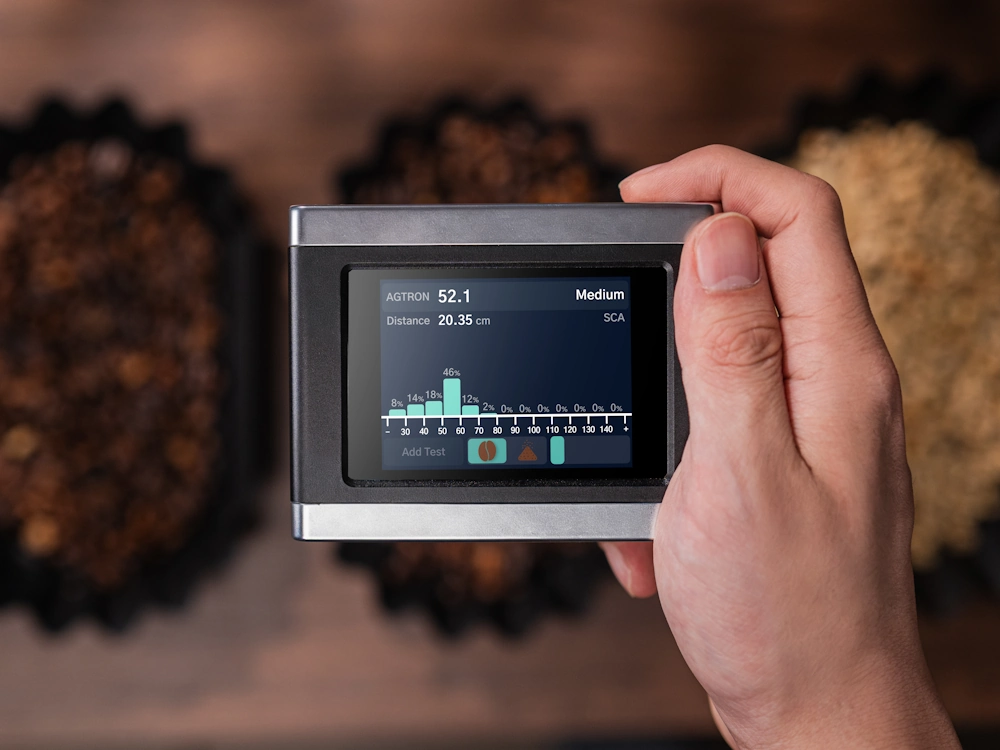
- Coffee roast colour analysis is essential for quality control, but it requires the right tools.
- Colourimeters, spectrophotometers, and Agtron analysers can provide precise readings of roast colour, but they are inaccessible to many roasters.
- According to research from the Specialty Coffee Association, over half of the specialty coffee roasters who attended the 2023 Roasters Guild Retreat described the roast level of their beans “simply by looking at them”, raising questions of accuracy and consistency.
- The technology used to analyse coffee colour is becoming even more sophisticated, offering multiple functions in compact, user-friendly formats.
The difference between great and exceptional specialty coffee often comes down to seconds of adjustment during the roasting process. While temperature curves have long been the roaster’s guide, coffee roast colour is often considered a more accurate measurement of roast profile and quality.
Analysing coffee colour, primarily using spectrophotometers and Agtron meters, helps determine the roast level and, therefore, the flavour profile. Roasters use these numerical readings (higher values indicate lighter roast profiles; lower values indicate darker roasts) to ensure consistent quality and flavour, but there are no industry-wide standards.
When purchasing coffee, consumers often consider roast level a primary factor, so roasters need to provide accurate information. But colour analysis equipment is often expensive or produces inconsistent results across models, which means roasters risk inadvertently misleading customers and losing sales.
James Corwin at DiFluid, coffee blogger DPGG, and café owner and business consultant Chacha explain what roasters need to know about analysing coffee colour.
You may also like our article on what roasters need to know about analysing green and roasted coffee.
Measuring roast profiles
Traditionally, roasters have relied on temperature to guide their roast profiles, monitoring temperature curves and Rate of Rise (RoR) to achieve consistent results.
“As time and temperature gradually increase throughout the roast, coffee changes from the green colour of raw beans (which may vary depending on processing, from pale yellow to light green or yellow-green) to yellow, then to brown,” says Chacha, the author of The Coffee Walker’s Holographic Roasting Method and The Coffee Walker’s Holographic Roasting Method: Techniques.
“Eventually, as temperature and time continue to rise, the beans shift from dark brown to carbonised black,” he adds. “Regardless of the coffee’s original raw bean colour, it undergoes the same progression.”
Temperature remains essential to understanding roast profile development, but it doesn’t represent the full scope.
“The probe measures a mixture of bean temperature and the roaster’s environmental temperature, but its position, thickness, and sensitivity vary significantly between different machines,” explains DPGG, a coffee blogger specialising in roasting science.
This becomes especially problematic when roasters scale up from sample roasters to production machines or switch between different equipment. The same temperature profile on two different roasters rarely produces identical results because bean temperature measurements vary significantly between machines.
Roasted coffee colour, therefore, serves as a fundamental measure of roast profile, including light, medium, dark, and the nuances in between.
However, these descriptors mean different things to different people. What one roastery considers a medium roast might be dark to another, for example. This has the potential to create confusion for industry professionals and consumers alike and to lead to inconsistencies among roasters.
Why do roasters analyse coffee roast colour?
Colour, meanwhile, provides a more stable and reliable reference point for roast level.
“Surface colour is an inherent characteristic of the coffee bean itself and is not significantly affected by changes in roaster model or roasting environment,” DPGG says. “Therefore, it provides a more accurate reflection of the bean’s roast degree and development.”
“Roasters analyse coffee colour for an ever-increasing number of different reasons,” says James, the Product Manager and UX Designer at DiFluid, which designs and manufactures tools and technologies for specialty coffee professionals.
“Using colour means roasters can effectively communicate roast level to each other,” he adds. “It can also help determine brewing method so that roasters can better calibrate their roast profiles. Colour can also be measured before roasting to understand more about the green coffee and how it will change during the process.”
Yet measuring coffee colour by eye remains notoriously unreliable. Lighting conditions, surrounding colours, and individual perception all influence what roasters see, leading to inconsistent and inaccurate readings.
Technology bridges this gap between human observation and objective measurement.
“In the past, only large-scale commercial roasters would analyse roast colour to maintain consistency and precision between different production factories and from batch to batch,” James explains. “As the cost of colour meters has come down and become accessible to the average user, the use cases have expanded.
“While home roasters and smaller operations also use colour for batch-to-batch consistency, now roasters can use colour to help in the standardisation of colour descriptions,” he adds. “Colour scanners like the Omni, Omix, and OmniFlux can help assess the evenness of coffee blends, or to identify scorching or uneven roasting.”
Analysing coffee colour in the pursuit of excellence
Historically, there has been no universal standard for measuring roasted coffee colour, but analysing this variable provides roasters with crucial insights into profile development and, ultimately, flavour.
The SCA recently published a white paper proposing a new standardised scale for measuring roast level based on visible light measurements. The association will invite an expert group to review the draft standard at the end of 2025, with the goal of a Standard Development Panel review in 2026.
The relationship between roast colour and coffee flavour is complex but undeniable; colour change during roasting reflects the chemical reactions that create coffee’s aromatic compounds.
As coffee roasts, it undergoes nonenzymatic browning reactions, primarily caramelisation and the Maillard reaction.
“Coffee bean colour development and flavour changes are driven by chemical reactions,” explains Chacha. “Chemical reactions depend on materials, temperature, and time; and the ‘materials’ are shaped by factors such as altitude, variety, ripeness, and fermentation level.”
This means that beans with different compositions will develop colour at different rates, even under identical temperature curves. By monitoring colour changes, roasters can make faster, more accurate adjustments during the roast.
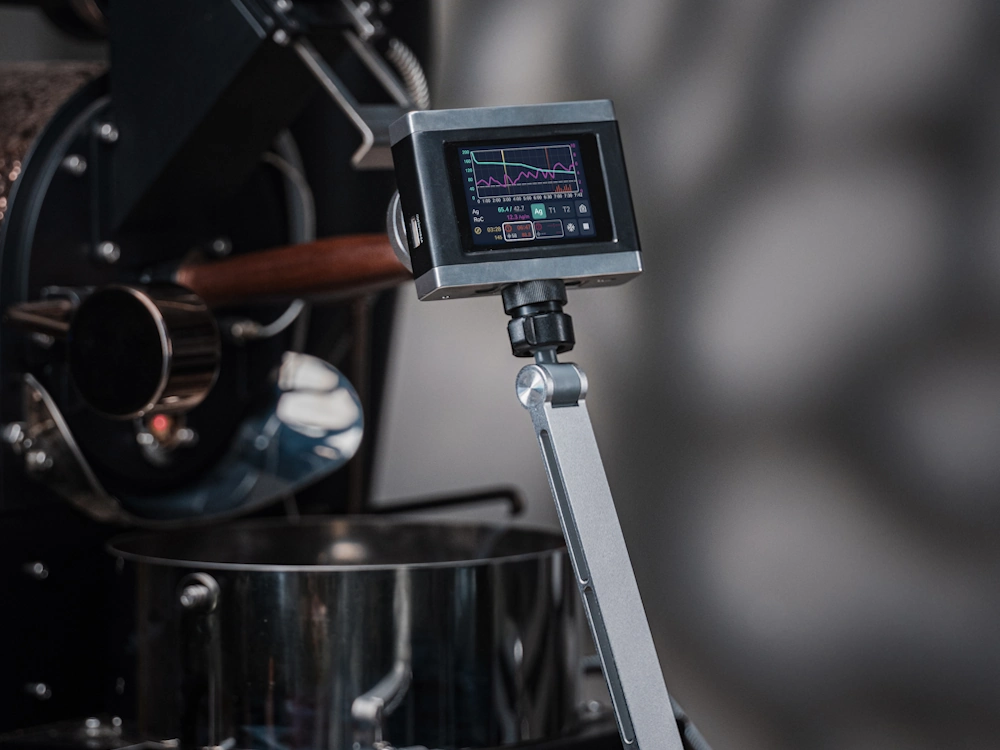
DiFluid’s OmniFlux real-time roast colour analyser assists this process by tracking colour change over time and generating both a colour curve and a rate-of-change curve.
“By aiming the OmniFlux at any roaster with a viewing window, the colour change can be tracked over time,” says James. “This can be used to build roast profiles based on colour change rather than just temperature alone, increasing accuracy and consistency.”
Even after roasting, colour measurement remains a powerful quality control tool. Modern devices can measure both bean surface and ground coffee colour values while displaying distribution bar charts.
“This helps roasters assess the uniformity of raw bean quality and manage energy application throughout the roast,” Chacha notes. He pays particular attention to the RD value, standard deviation, and whether the measurements follow a normal distribution – indicators that show whether a roast achieved consistency throughout the batch.
“When measuring, it’s important to pay attention to the distance between the OmniFlux and the target bean bed, as well as the density of the bean pile,” Chacha observes from his experience with the device. “In my own trials, maintaining a distance of about 30cm yielded the most stable results.”
There is also significant potential for colour analysis to support further experimentation in specialty coffee.
“I soaked coffee in kombucha for a day and then re-dried it just to see how it would taste,” James explains. “I failed to let it dry long enough, and after 14 minutes of roasting, it had only reached 180°C, still about 20°C below first crack.
“However, at this time, it had gotten down to 60 Agtron, dark enough to be considered a medium-dark roast profile.”
While that particular experiment yielded unsatisfactory results, it illustrated a crucial point: colour development and temperature don’t always correlate as expected.
“It’s clear just how separated colour change is from temperature, and gives you an idea of what roasting by colour can unlock,” James adds.
How technology is evolving to analyse coffee colour
For decades, the Agtron analyser served as the de facto standard for measuring coffee roast degree, using proprietary technology to assign numerical values to roast levels. While effective, such systems remained inaccessible to many roasters due to cost and complexity.
But technology has evolved considerably in recent years. Modern colour analysis tools offer multiple functions in compact, user-friendly formats. These advancements benefit roasters by making precise measurement accessible regardless of operation size, enabling better communication across the supply chain, and supporting more experimental roasting approaches.
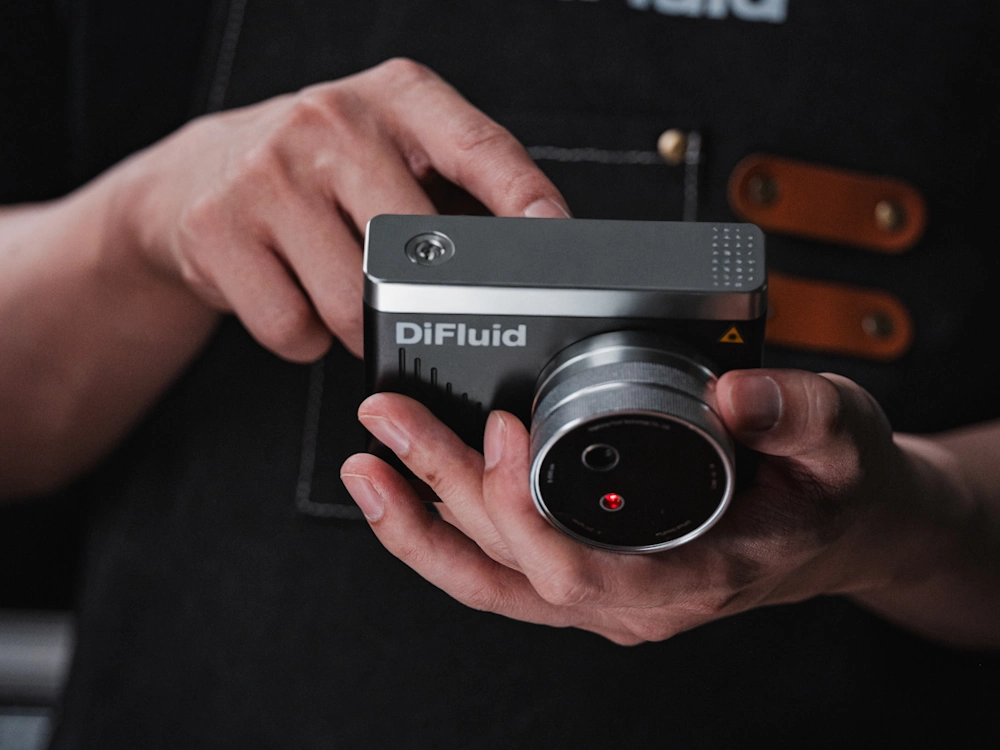
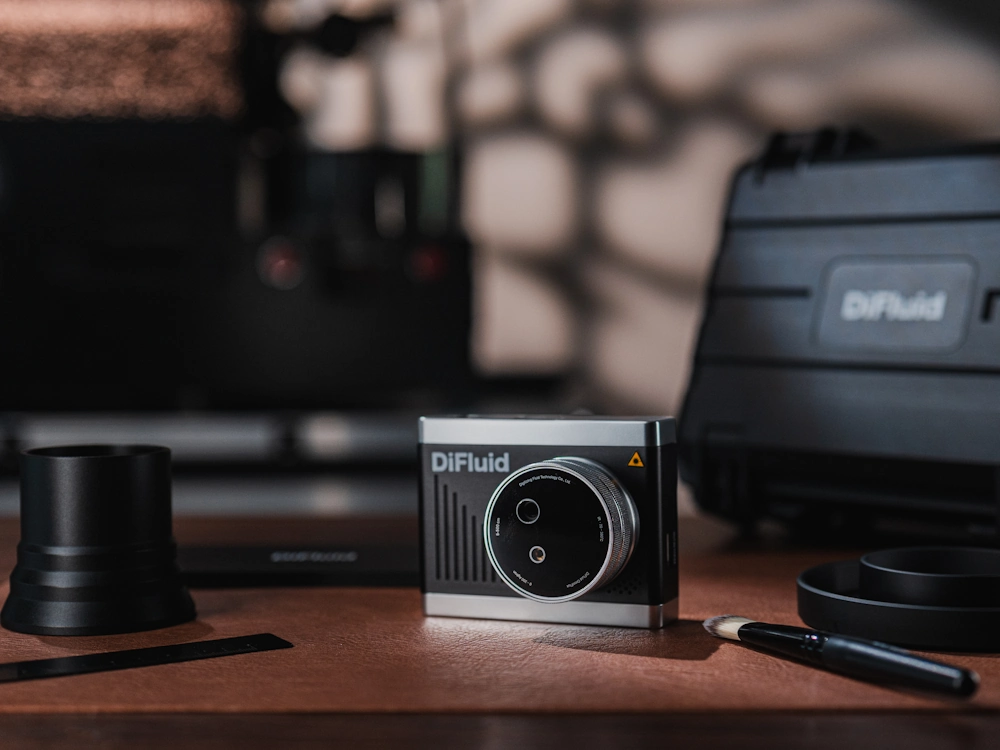
What distinguishes current innovations is their integration of multiple measurement capabilities. DiFluid’s OmniFlux, for instance, analyses colour both during and after roasting, a combination that represents a significant shift in how roasters can monitor their work.
During roasting, it functions as a real-time colour tracker. Afterwards, it serves as a colour scanner for batch analysis. The device also includes two slots for optional temperature probes and a built-in infrared temperature sensor.
“By switching to Cool Track mode and aiming OmniFlux at the cooling tray, users can simultaneously scan the colour distribution and generate a cooling curve, while ensuring colour does not change during cooling,” James explains.
Beyond these core functions, it includes a Tool mode that provides access to real-time measurements from all onboard sensors. This transforms the device into a spirit level, rangefinder, infrared thermometer, and environmental monitor, offering additional practical tools for roasters.
Perhaps most significantly, modern coffee roast colour analysers can facilitate knowledge sharing across the industry.
“DiFluid has developed a complete and coherent product ecosystem,” Chacha observes. “Their roasting-related devices can all be upgraded via OTA, and OmniFlux serves as a multifunctional terminal.”
DPGG also emphasises the technology’s maturity: “It not only offers strong dynamic detection capabilities, but its static measurement functions are also remarkably powerful.”
As roasters gain access to more sophisticated yet affordable tools to understand what happens inside their machines, the gap between intuition and science narrows, and the ability to achieve coffee excellence becomes more accessible.
Whether monitoring colour development in real-time, analysing the final result, or both, roasters are gaining unprecedented insight into the roasting process.
As coffee roasting becomes increasingly sophisticated, roasters seek tools that enhance rather than complicate their craft. By providing objective measurements that translate across machines and batch sizes, colour analysis tools help roasters achieve consistency while pushing creative boundaries.
In an industry where precision and flavour expression must coexist, understanding what roast colour means is understanding coffee more completely.
Enjoyed this? Then read our article on how to minimise hazards in a roastery.
Photo credits: DiFluid
Perfect Daily Grind
Please note: DiFluid is a sponsor of Perfect Daily Grind.
Want to read more articles like this? Sign up for our newsletter!
The post Analysing coffee colour: What roasters need to know appeared first on Perfect Daily Grind.